● Program Overview
“Accelerating Breakthrough Ideas” , Challenge Funds for Youth-Led Innovation
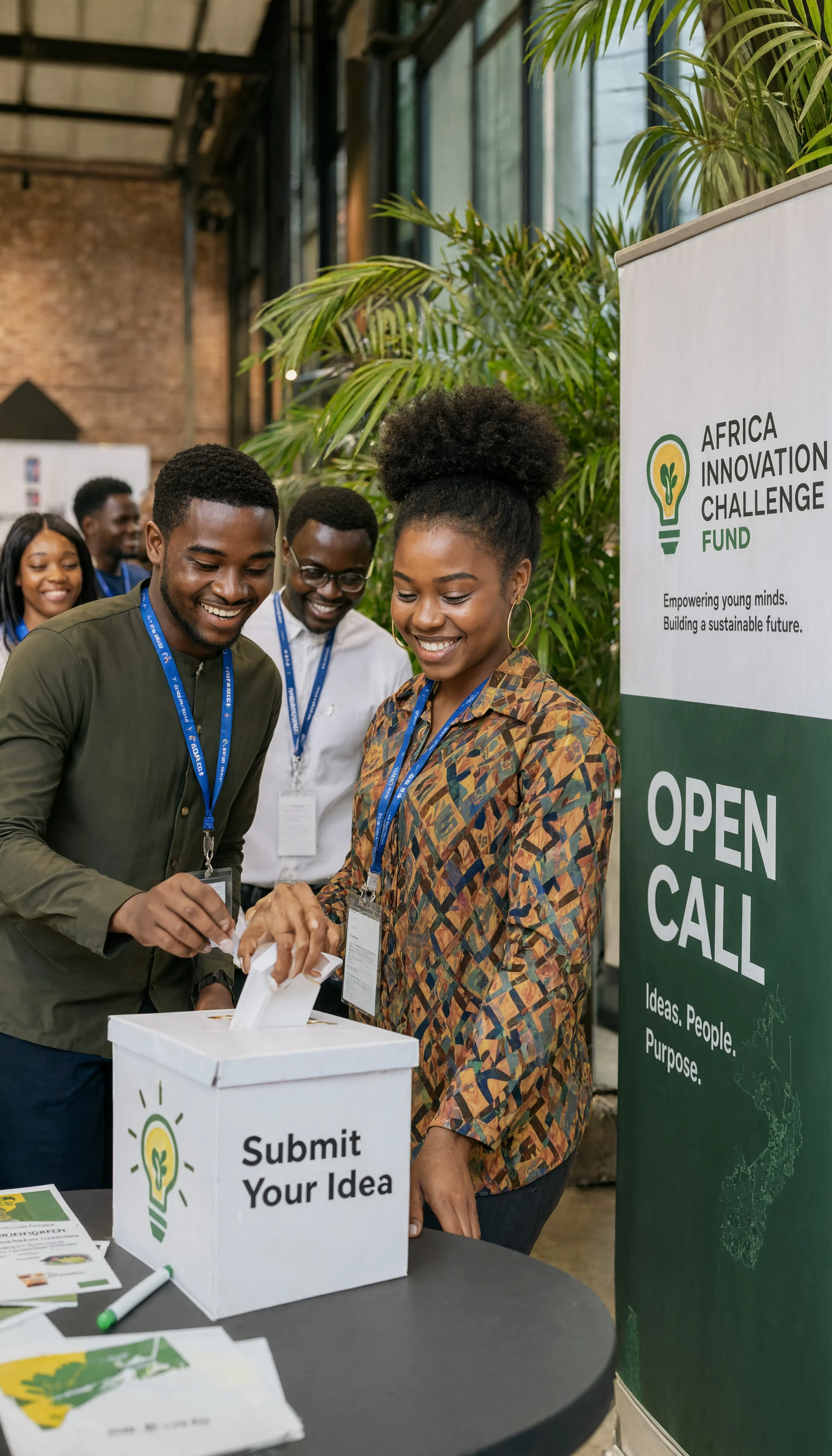
The Accelerating Breakthrough Ideas Challenge Fund is TAYF’s dedicated mechanism for identifying and scaling the most transformative solutions to the social challenges that matter most to young people and their communities. Through open calls, competitive processes, and innovation prizes, we provide catalytic funding to youth-led organisations and entrepreneurs whose ideas have the potential to shift systems, disrupt entrenched problems, and demonstrate that young people are its most powerful architects.
The Challenge Fund is designed to surface what traditional funding mechanisms chronically overlook: the bold, the unconventional, and the brilliantly community-specific. We believe that breakthrough ideas rarely emerge from the centre of the development sector. They emerge from the edges, from young people living inside the problems they are solving, who see what others cannot, and who, given the right catalytic support, can prove entirely new models of change
Why Challenge Funds Matter
The development sector has a well-documented tendency to fund what it already understands. Established organisations with polished proposals and long donor relationships attract the majority of available capital, while early-stage innovators, often the ones carrying the freshest thinking and the deepest community insight, struggle to find a foothold. This creates a structural gap between where good ideas live and where funding flows. The consequences are significant. Solutions that could fundamentally alter how communities address poverty, climate vulnerability, unemployment, or civic exclusion never reach the scale they deserve, because they were never properly resourced to begin with.
The Challenge Fund exists to close that gap. By deliberately opening competition to organisations and individuals at the frontier of social innovation, we introduce a different logic into the funding ecosystem: one that prizes vision, contextual intelligence, and transformative potential rather than institutional size or donor familiarity. Catalytic funding, delivered at the right moment in an idea’s development, can be the difference between a concept that transforms a community and one that never leaves a notebook.
What We Support
The Challenge Fund operates across six interconnected focus areas that reflect both the breadth of youth-led innovation and the most pressing challenges facing young people and their communities globally. In the domain of youth employment, we support organisations developing new pathways into dignified, sustainable livelihoods, from skills ecosystems and entrepreneurship enablement to alternative labour market models that centre young people’s agency and economic futures. On climate resilience, we fund youth-led responses to the accelerating climate crisis, prioritising solutions that are community-designed, locally grounded, and built to endure the specific vulnerabilities of the contexts in which they operate.
In mental health, we recognise the growing and still largely unmet need for youth-centred approaches to psychological wellbeing particularly in communities where stigma, resource scarcity, and systemic neglect have left young people without adequate support. We fund organisations reimagining how mental health is understood, accessed, and delivered from within communities rather than imposed from outside them. Our gender equality focus supports ideas that challenge structural inequity, dismantle discriminatory norms, and create genuine safety, opportunity, and power for young women and gender-diverse youth. Through civic innovation, we back organisations building new forms of youth participation in democratic life, governance, and community decision-making thereby restoring young people’s stake in the systems that shape their futures. And across community development more broadly, we support the full range of place-based, constituency-rooted solutions that defy easy categorisation but carry unmistakable potential to improve the quality of life for young people and the communities they call home.
How The Fund Works
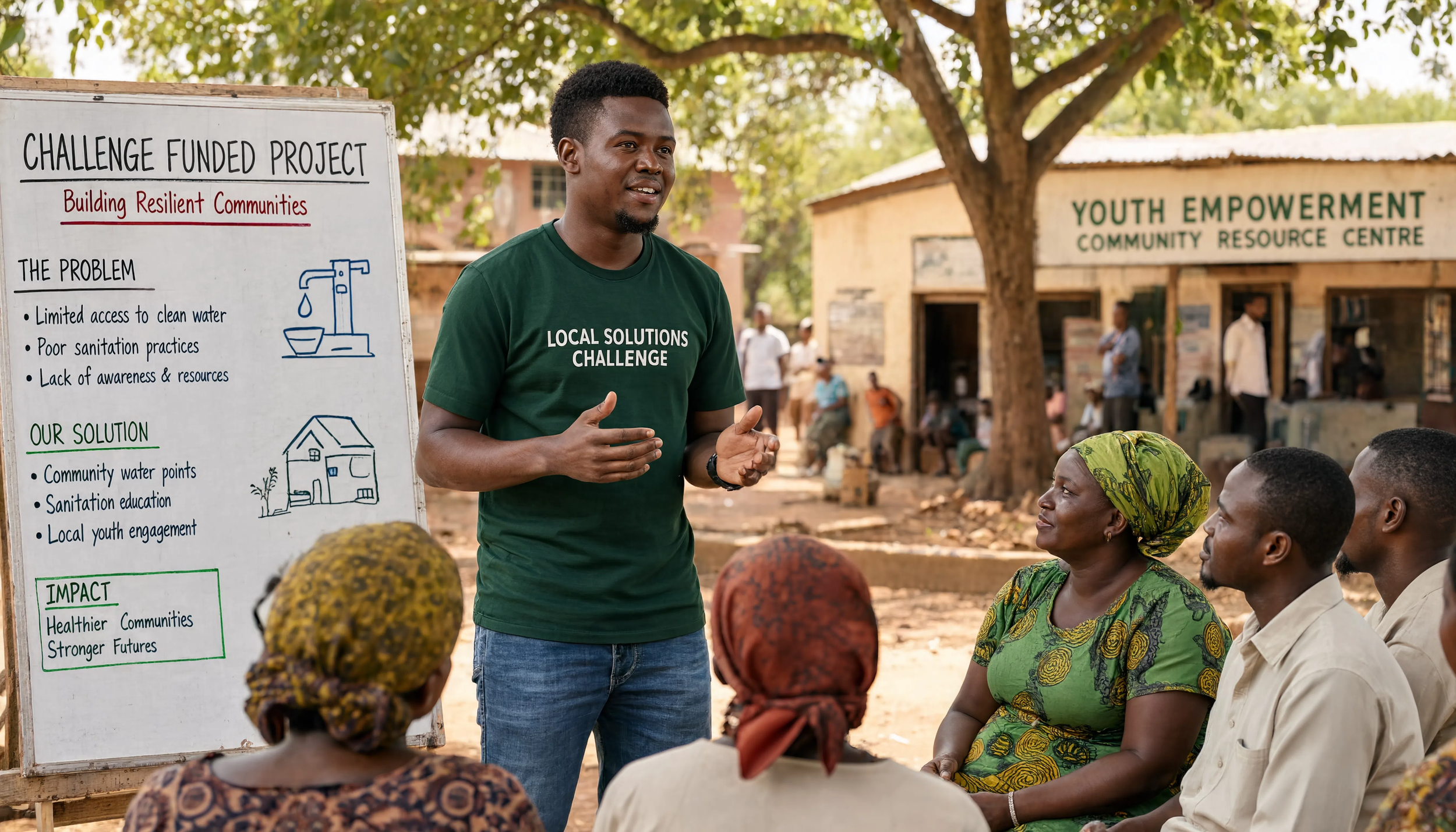
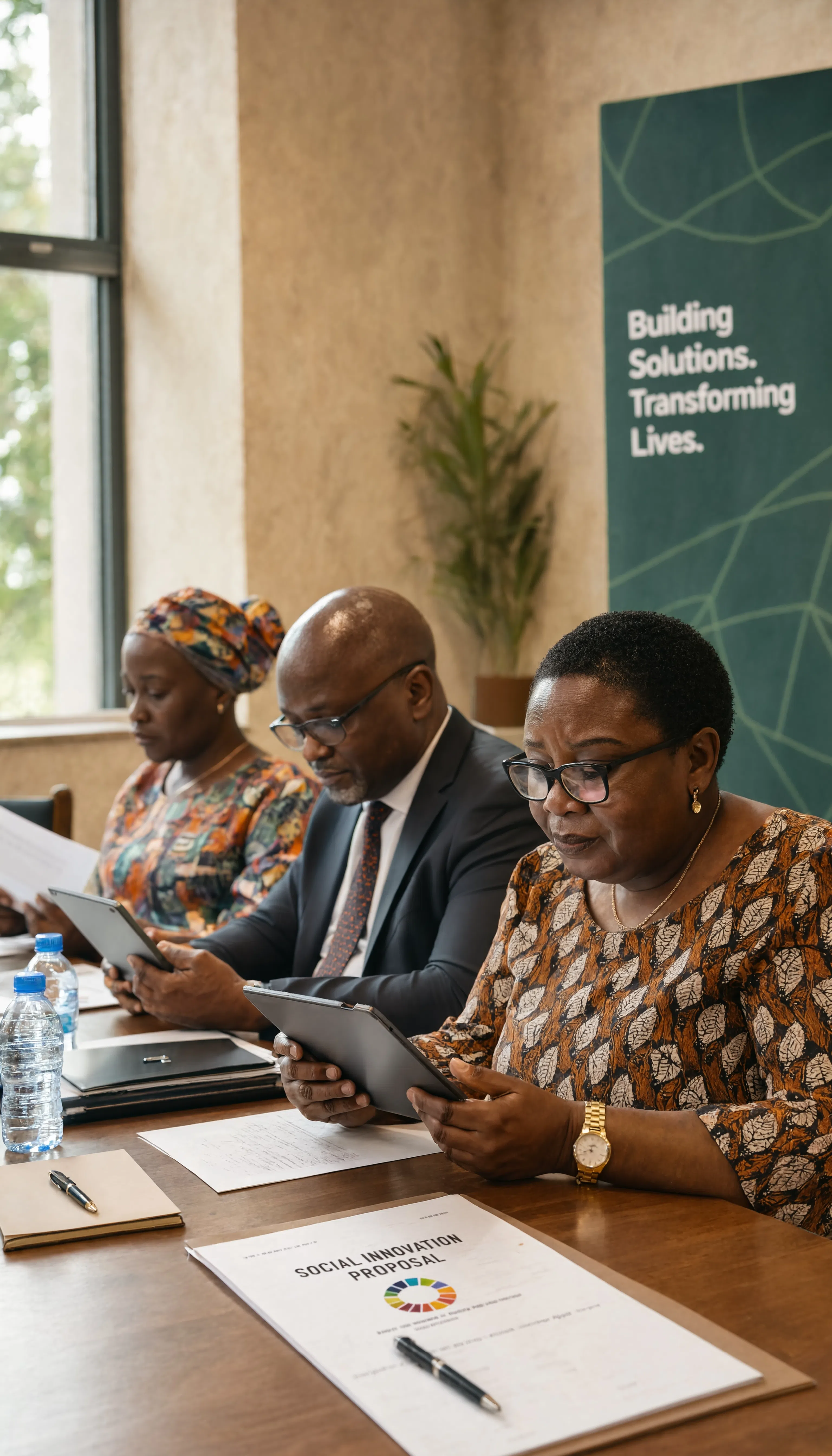
The Challenge Fund operates through structured open calls issued on a rolling basis across our focus areas, as well as targeted competitions and innovation prizes designed to mobilise responses to specific, time-sensitive challenges. Applications are evaluated not based on organisational size or prior funding history, but on the strength of the idea itself, the depth of community grounding behind it, the credibility of the team proposing it, and the plausibility of the change it promises to create. We are looking for ideas that are ambitious but not naive, innovative but not disconnected from lived reality, and scalable in the sense that matters most, not necessarily replicable everywhere, but capable of producing genuine, durable impact in the contexts they address.
Successful applicants receive catalytic grants structured to match the development stage of their idea, alongside access to TAYF’s broader network of peer innovators, mentors, and strategic partners. We recognise that funding alone rarely determines whether a breakthrough idea realises its potential, and so our support extends beyond capital to the connections, learning, and institutional accompaniment that help promising solutions grow into proven ones.
The Challenge Fund is open to youth-led organisations, social enterprises, and individual entrepreneurs with registered or formalising structures, operating across any of our six focus areas. Leadership must be youth-led, with decision-making authority held by individuals aged 35 or under. We welcome applications at varying stages of development, from organisations with a refined model seeking validation funding to early-stage innovators with a strong concept and the community credibility to execute it. What we are looking for in every applicant is the same: a genuine idea, a genuine connection to the community it serves, and a genuine commitment to learning and accountability through the process of bringing that idea to life.
The most important breakthroughs are rarely the most obvious ones, and we have built the Challenge Fund specifically to find them.

Eligibility Criteria
The Challenge Fund is designed for organisations and individuals operating at the intersection of youth leadership and social innovation. Eligibility is intentionally broad, because we recognise that breakthrough ideas do not follow a standard organisational profile. What we are looking for is not a particular size, structure, or stage of development — it is a genuine idea, a genuine connection to community, and a genuine commitment to learning and accountability.
Applicants must be youth-led, with primary decision-making authority held by individuals aged 35 or under. This is not a nominal requirement — we are looking for organisations and teams where young people hold real power over strategy, resources, and direction. Applicants must hold legal registration in their operating country, or be in an active formalisation process, in which case they may apply under TAYF’s Pre-Registration Innovation Track with an eligible institutional host. There is no minimum organisational age requirement for the Challenge Fund, though applicants must demonstrate sufficient operational capacity to responsibly manage and deploy grant funding.
The proposed innovation must be directly responsive to one or more of the Challenge Fund’s six focus areas, and must be grounded in a specific community or constituency whose experience has shaped its design. We are not looking for generic solutions — we are looking for ideas that emerge from genuine proximity to a problem and genuine accountability to the people it affects. Applicants must be able to articulate a clear and credible theory of change connecting their proposed innovation to meaningful, durable impact, and must demonstrate the team capacity and community relationships necessary to execute it.
We do not fund innovations where youth leadership is nominal, proposals without demonstrated community grounding, government bodies or agencies, or for-profit entities without a clearly defined social mission and community accountability structure. We also do not fund solutions that have already reached significant scale and are primarily seeking expansion capital — the Challenge Fund is for ideas in their most generative and catalytic early stages. If you are uncertain whether your idea or organisation meets our eligibility criteria, we strongly encourage you to reach out before applying. We would rather have a conversation than see a strong innovation self-select out of the process.


Theory of Change
The Challenge Fund’s Theory of Change is grounded in a foundational premise: that the solutions most capable of transforming the conditions facing young people already exist, in nascent or partially-developed form, within the communities experiencing those conditions. The barrier is not a shortage of ideas. It is a philanthropy system that consistently fails to find, resource, and trust them.
The pathway begins with Inputs: open, accessible calls for innovation; catalytic and appropriately sized grants; peer networks and mentorship; co-design support; and a reduced administrative burden that does not penalise organisations for being early-stage. These inputs enable Activities: the development, testing, and iteration of community-grounded solutions across TAYF’s six focus areas, carried out by youth-led teams who bring both strategic ambition and deep contextual intelligence to the problems they are addressing.
The immediate Outputs are validated innovations — solutions that have been tested in real community contexts, refined through honest learning cycles, and demonstrated to produce meaningful change at the local level. Alongside these validated models, the process produces stronger innovators: youth leaders and organisations that have grown in strategic capacity, community credibility, and readiness to attract further investment and scale their work. These outputs translate into Outcomes that operate at multiple levels simultaneously. At the individual level, young innovators develop the leadership, skills, and networks to sustain long-term careers in social change. At the community level, better-designed, more locally-owned solutions produce tangible improvements in the areas each innovation addresses — employment, mental health, climate preparedness, gender equity, civic participation, or community wellbeing. At the sector level, successful Challenge Fund innovations shift the evidence base, demonstrate what is possible when young people are trusted with catalytic resources, and challenge the risk aversion that keeps conventional philanthropy locked in familiar funding patterns.
The cumulative long-term Impact is a more dynamic, more diverse, and more youth-led innovation ecosystem, one in which breakthrough ideas originating in underserved communities have a genuine and well-resourced pathway to scale, policy influence, and lasting systems change. This Theory of Change rests on three core assumptions: that contextual proximity produces better solutions than external expertise; that catalytic funding at the right moment has a disproportionate effect on an idea’s long-term trajectory; and that peer learning and network access multiply the value of financial support far beyond what capital alone can achieve.
Expected Outcomes
We measure the impact of the Challenge Fund at three interconnected levels, recognising that organisational strength, community change, and systems transformation are not sequential milestones but simultaneous and mutually reinforcing processes.
At the innovator and organisational level, we expect grantees to emerge from the Challenge Fund with validated models, strengthened leadership capacity, and the institutional credibility and track record needed to attract follow-on funding. We anticipate that a significant proportion of Challenge Fund alumni will successfully secure additional investment — from TAYF’s own Flexible Funding Framework, from peer funders, or from impact investors attracted by demonstrated results. Beyond funding, we expect grantees to develop more sophisticated theories of change, stronger community accountability mechanisms, and the adaptive capacity to evolve their models in response to what they learn.
At the community level, we expect Challenge Fund innovations to produce measurable improvements in the specific domains each grantee addresses. Young people in communities served by Challenge Fund grantees should have access to better employment pathways, stronger mental health support, more resilient responses to climate shocks, safer and more equitable social environments, and more meaningful avenues for civic participation. These improvements are not outputs of an external programme — they are the product of solutions designed, led, and owned by the communities themselves, which is precisely what makes them durable.
At the systems level, we expect the Challenge Fund to contribute to a meaningful shift in how innovation in the development sector is sourced, recognised, and funded. As Challenge Fund alumni grow in visibility and influence, they become evidence that youth-led innovation is not a development experiment but a development imperative. Their success challenges peer funders to rethink the criteria by which promising organisations are identified and supported, and creates new norms around risk tolerance, community ownership, and the legitimate role of young people in driving social change. Across our portfolio, we aim to demonstrate that the most transformative solutions to the world’s most urgent challenges are already being built — they simply need the resources and recognition to reach their full potential.

● Program Overview
Frequently Asked Questions
-
Grant sizes vary depending on the focus area, the development stage of the proposed innovation, and the operational context of the applicant organisation. We do not apply a single grant ceiling — instead, we structure awards through dialogue with successful applicants to ensure funding is appropriately matched to what the innovation actually requires. Grants typically range from early-stage catalytic awards for concept validation through to larger implementation grants for innovations with demonstrated proof of concept. Grant periods are similarly flexible, though most awards run between twelve and twenty-four months. Duration is determined in partnership with the grantee based on the realistic timeline for meaningful progress.
-
Catalytic funding means capital deployed at the moment in an idea’s development when external support has the greatest potential to unlock forward momentum. In practice, Challenge Fund grants carry significantly fewer restrictions than conventional project funding. Grantees are expected to use funds in service of their approved innovation, but within that scope, allocation decisions rest with the grantee’s leadership. We do not impose rigid budget line approvals, and we do not penalise strategic adjustments made in response to community feedback or changing circumstances. What matters to us is that resources are deployed thoughtfully, in genuine service of the community the innovation is designed to benefit.
-
Reporting requirements are proportionate to grant size and focused on learning rather than compliance. We ask grantees to share what they are discovering — about their model, their community, and what is and is not working — rather than to demonstrate line-by-line financial adherence. Most grantees engage in two structured reflection conversations per year with their TAYF programme contact, supplemented by a concise written update at the midpoint and close of the grant cycle. We believe reporting should generate insight, not administrative burden, and we design our requirements accordingly.
-
The Challenge Fund prioritises applications from organisations operating in contexts where youth-led innovation is most structurally underfunded and where our support can have the greatest catalytic effect. We encourage organisations from any geography to reach out before applying to discuss whether the Challenge Fund is the right fit for their context and focus area. Geography alone is never a disqualifying factor — what matters most is the strength of the idea and the depth of community grounding behind it.
-
We expect innovations to evolve. The most honest and community-responsive organisations are precisely the ones most likely to discover mid-implementation that their original model needs to change. We do not treat strategic pivots as compliance failures — we treat them as signs of an organisation that is learning and adapting in the way breakthrough innovation demands. Grantees are expected to communicate significant changes in direction with their TAYF programme contact, and we will work collaboratively to assess implications and adjust support accordingly. Transparency is the only requirement — not rigidity.
-
Yes. The Challenge Fund is explicitly designed as an entry point into TAYF’s broader funding ecosystem. Organisations that demonstrate strong results, genuine community accountability, and the institutional foundations for sustained impact are actively considered for TAYF’s Flexible Funding Framework, which provides multi-year, unrestricted core funding to youth-led organisations ready for a deeper partnership. Not every Challenge Fund grantee will transition into the Flexible Funding Framework, but every grantee leaves the process with stronger connections, a more developed model, and a clearer pathway to the next stage of their growth — whether with TAYF or with other funders in our network.
-
We assess early-stage applications primarily on the quality of the idea, the credibility of the team, and the depth of community connection rather than on organisational track record or financial history. We recognise that the most transformative innovations often come from the least established organisations, and we have deliberately designed our assessment criteria to avoid the institutional bias that causes conventional funders to systematically overlook them. Early-stage applicants are encouraged to be honest about where they are in their development — we are far more interested in clarity of vision and genuine community grounding than in the appearance of maturity.